
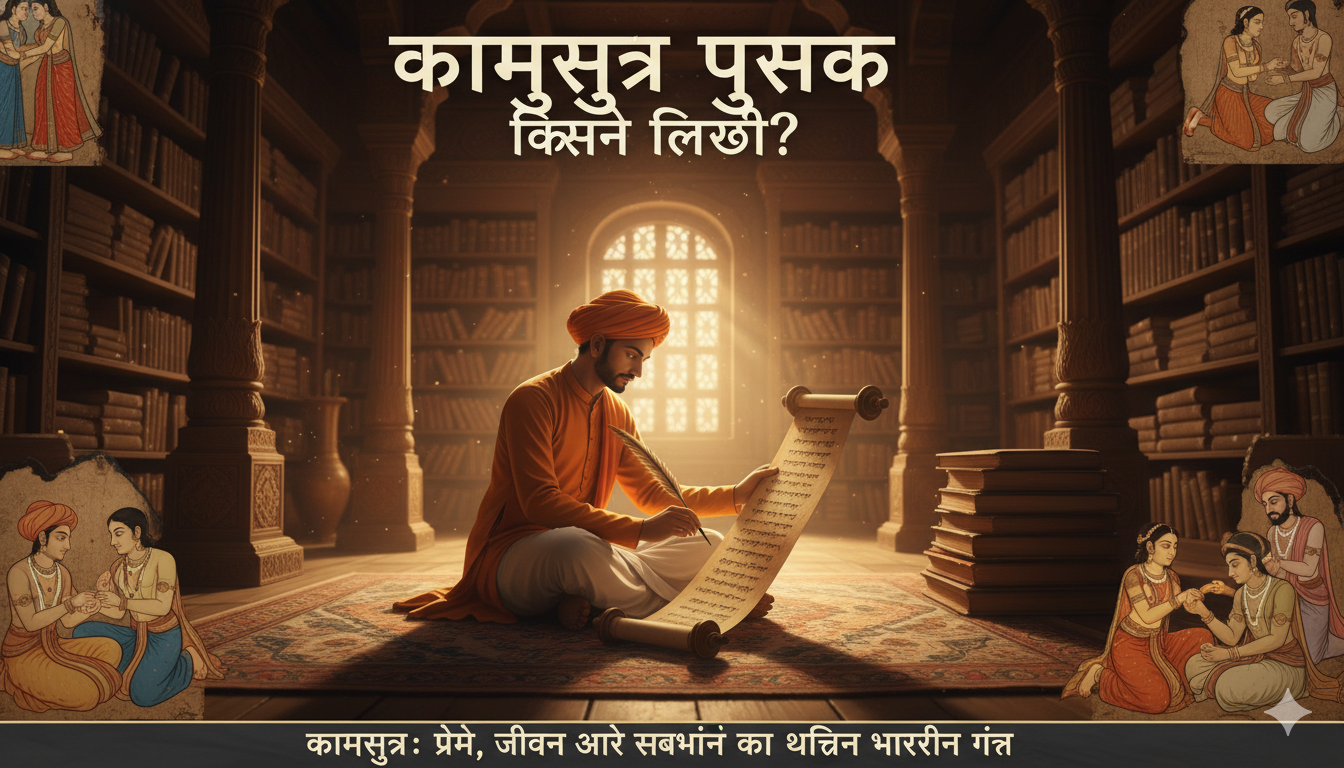

Many people around the world ask this famous question: Kamasutra Book Kisne Likhi? When we hear the word Kamasutra, we often think of different body postures and ancient art. However, this ancient text is actually a deep guide to life, love, and relationships. It was written thousands of years ago in ancient India. Understanding its history helps us see how people viewed love and society in the past.
In this article, we will find out exactly kamasutra book kisne likhi and explore its true meaning. We will look into its translations, temple connections, and chapters. This guide is written in very easy language so anyone can understand the rich history of this famous book. Let us dive into the fascinating story of this ancient Indian manuscript.
Kamasutra Book Kisne Likhi: The Mastermind Author
If you are searching for kamasutra book kisne likhi, the direct answer is Sage Vatsyayana. He was an ancient Indian philosopher and writer who lived during the Gupta Empire. Scholars believe he wrote this text between the 4th century and 6th century CE. Vatsyayana was not a king or a warrior, but he was a highly educated monk who studied human behavior closely.
Vatsyayana did not create all the ideas by himself. He collected older lessons from ancient wise men and combined them into one organized book. When people ask kamasutra book kisne likhi book, they should know that Vatsyayana wanted to help ordinary people live a balanced and happy family life. He believed that love, physical pleasure, and duty are all important parts of being a good human being.
Biography Table of Sage Vatsyayana
| Feature | Details |
| Author Name | Sage Vatsyayana Mallanaga |
| Era / Period | Gupta Empire (Around 4th to 6th Century CE) |
| Language Written | Sanskrit |
| Main Philosophy | Kama (Love/Pleasure), Dharma (Duty), Artha (Wealth) |
| Famous Work | Kamasutra |
| Purpose of Writing | To guide human society on love, relationships, and family life |
What is Kamasutra Book Kisne Likhi: Understanding the True Meaning
To truly answer what is kamasutra book kisne likhi, we must look beyond just physical postures. The word Kama means desire, love, or pleasure, and Sutra means a thread or a guide book. So, the book is literally a guide to love and desires. Vatsyayana wrote it as a textbook for elegant citizens of ancient Indian cities.
The book covers many topics like finding a good life partner, maintaining a happy marriage, and behavior in society. It teaches manners, music, arts, and how to treat your partner with respect. So, when someone asks what is kamasutra book kisne likhi, tell them it is a complete lifestyle guide from ancient times, not just a manual for intimacy.
Kamasutra Book Kisne Likhi English: The Journey to the West
For a very long time, this book was only known in India. But later, the Western world also wanted to know kamasutra book kisne likhi english style. In the late 19th century, Western explorers discovered this text. They were amazed by how openly ancient Indians discussed human relationships and emotions.
The phrase kamasutra book kisne likhi english connects us to the global journey of Indian literature. It showed the world that ancient Indian culture was highly advanced, scientific, and open-minded about human nature. Today, millions of people read it globally to understand ancient philosophy.
Kamasutra Book Kisne Likhi English Translation: Sir Richard Burton’s Role
If you want to know about kamasutra book kisne likhi english translation, the main credit goes to Sir Richard Francis Burton. He was a famous British explorer and author. In the year 1883, he helped translate the Sanskrit text into the English language for the very first time.
This translation was not easy because Victorian England was very strict and conservative back then. Burton had to publish the book secretly through a private society to avoid legal trouble. This kamasutra book kisne likhi english translation history shows how a piece of ancient Indian wisdom broke social barriers across different countries and centuries.
Kamasutra Book Kisne Likhi In English: Modern Editions and Availability
Today, if you look for kamasutra book kisne likhi in english, you will find many modern versions. Modern writers have translated the book directly from Sanskrit to English without the old Victorian biases. These new versions are much easier to read and contain accurate historical notes.
Reading kamasutra book kisne likhi in english helps modern readers understand the actual advice given by Vatsyayana. It removes the myths and shows the beautiful poetic nature of the original text. You can easily buy these books at any local bookstore or online shop today.
Kamasutra Book Kisne Likhi In English PDF: Digital Reading Formats
In this digital age, many readers search for kamasutra book kisne likhi in english pdf online. A PDF format allows people to read this historical book privately on their mobile phones, tablets, or laptops. There are many academic websites that offer free downloads of the public domain versions.
When searching for kamasutra book kisne likhi in english pdf, it is important to download from safe and trusted websites. Many university libraries provide free PDF copies of Sir Richard Burton’s classic translation for history students and researchers worldwide.
Kamasutra Book Kisne Likhi PDF: Free Downloads and Academic Access
Similarly, the search for kamasutra book kisne likhi pdf is very common among Hindi and Sanskrit readers. People want to read the exact words written by the ancient sage. Digital copies help preserve this ancient text from getting ruined or lost over time.
Having a kamasutra book kisne likhi pdf version makes it easy to search for specific chapters or verses. Teachers and historians use these digital files to study the social structure, clothing, and lifestyle of the ancient Gupta period in India.
Kamasutra Book Kisne Likhi Temple: The Connection with Khajuraho Art
A lot of people ask about kamasutra book kisne likhi temple because they see beautiful stone carvings on old Indian temples. The most famous example is the Khajuraho temple complex in Madhya Pradesh, built by the Chandela dynasty. Another famous place is the Sun Temple in Konark.
However, the answer to kamasutra book kisne likhi temple is that the book was written much before these temples were built. The kings and artists were inspired by Vatsyayana’s book and carved those beautiful arts into stone walls. The temples celebrate all aspects of human life, including spirituality and love.
Kamasutra Book Kisne Likhi Bengali: Translations in Regional Languages
India is a country of many languages, so it is natural to ask kamasutra book kisne likhi bengali version. Bengal has a very rich literary history, and many scholars translated this ancient Sanskrit text into Bengali during the 19th and 20th centuries.
Learning about kamasutra book kisne likhi bengali tells us how regional scholars wanted to educate local communities about ancient heritage. These Bengali books often include detailed explanations by local pandits to help readers understand the deep philosophical meaning behind the text.
Kamasutra Book Kisne Likhi Positions: The Chapter Structure
When people look up kamasutra book kisne likhi positions, they are usually thinking about the chapters on physical intimacy. Out of the entire book, only one small section talks about different positions and physical love. The rest of the book talks about arts, social manners, and partner care.
Vatsyayana explained kamasutra book kisne likhi positions to show that physical love is an art form that requires patience, respect, and mutual consent. He treated this topic like a medical and psychological science, which was highly advanced for that ancient era.
The Three Goals of Human Life According to Vatsyayana
Sage Vatsyayana explained that every human being must balance three important goals in life. He called them Dharma, Artha, and Kama.
- Dharma means living a righteous life, doing your duty, and being good to society.
- Artha means earning wealth, working hard, and securing your family’s financial future.
- Kama means enjoying love, arts, music, beauty, and physical happiness.
The author believed that a person who ignores any of these three things cannot live a fully happy life. This shows that the text was meant to create a healthy, balanced society where nobody feels guilty about wanting happiness.
Conclusion: Emphasizing the Value of Ancient Wisdom
To summarize everything, when someone asks you kamasutra book kisne likhi, you can confidently tell them it was written by Sage Vatsyayana. It is an important pillar of ancient Indian literature that teaches love, respect, and balance in human life. It is not just about postures, but about understanding human emotions and building strong relationships.
What are your thoughts on this ancient Indian philosophy? Do you think modern relationships can learn something from these old texts? Please leave a comment below, share this article with your friends, and join the conversation!
Frequently Asked Questions (FAQs)
1. Kamasutra book kisne likhi?
The Kamasutra book was written by an ancient Indian sage and philosopher named Sage Vatsyayana. He lived during the Gupta Empire period.
2. Is the Kamasutra only about physical positions?
No. Only a small part of the book discusses positions. The majority of the book teaches about love, marriage, social manners, music, art, and how to maintain a happy family life.
3. Which temple is famous for Kamasutra art?
The Khajuraho Temples in Madhya Pradesh, India, are world-famous for their beautiful stone carvings inspired by the themes of love and the Kamasutra.
4. Who did the first English translation of this book?
The first English translation was done by the British explorer Sir Richard Francis Burton along with his friend Forster Fitzgerald Arbuthnot in the year 1883.
5. Can I download the Kamasutra book as a PDF?
Yes, because the book is thousands of years old, it is in the public domain. You can find free, legal PDF versions of the historical English translations on academic and library websites.
6. In which original language was the book written?
Sage Vatsyayana wrote the original book in Sanskrit, which was the primary language of scholars and philosophers in ancient India.