

Have you ever wondered what happens behind the scenes when you type a question into Google? You press enter, and in less than a second, a screen full of helpful links, videos, and pictures pops up. That page full of answers is called a SERP, which stands for Search Engine Results Page.
Understanding how a SERP works is the secret superpower behind making any website successful. Whether you run a tiny local bakery, write a daily personal blog, or manage a large online business, your main goal is to show up at the very top of this page. When your site appears at the top of a SERP, thousands of interested people can discover your work every single day without you paying for ads.
In this easy-to-read guide, we will break down what a SERP is, how search engines decide what to show, and how you can climb your way to the top!
Detailed Overview: Quick Facts About SERP
Here is a quick snapshot of what you need to know about the search engine results page:
| Topic Key | Details & Fact Check |
| Full Term | Search Engine Results Page (SERP) |
| Primary Goal | Provide searchers with fast, accurate answers to their questions. |
| Core Components | Organic results, paid ads, featured snippets, and local maps. |
| Top Rank Value | The #1 organic result gets roughly 30% to 40% of all user clicks. |
| Key Optimization Area | On-page SEO, high-quality content, and fast page load speeds. |
What Does SERP Mean in Search Engine Optimization?
At its core, a SERP is the digital digital storefront of the internet. Every time a user types a word or phrase into a search bar, the search engine scans billions of web pages in its index. It then organizes those pages in order of helpfulness and displays them on the SERP.
In the world of search engine optimization (SEO), the SERP is where all the action takes place. When people search for helpful guides or products, they rarely click past the first page. In fact, most users only look at the top three listings before picking an answer. That means if your page ranks on page two or three, very few people will ever find it.
By learning how a SERP works, you can structure your website content so search engine robots easily understand it, trust it, and reward it with a spot right at the top.
Organic Results vs. Paid Ads on a SERP
When you look closely at any search page, you will notice two main types of listings: organic search results and paid advertisements.
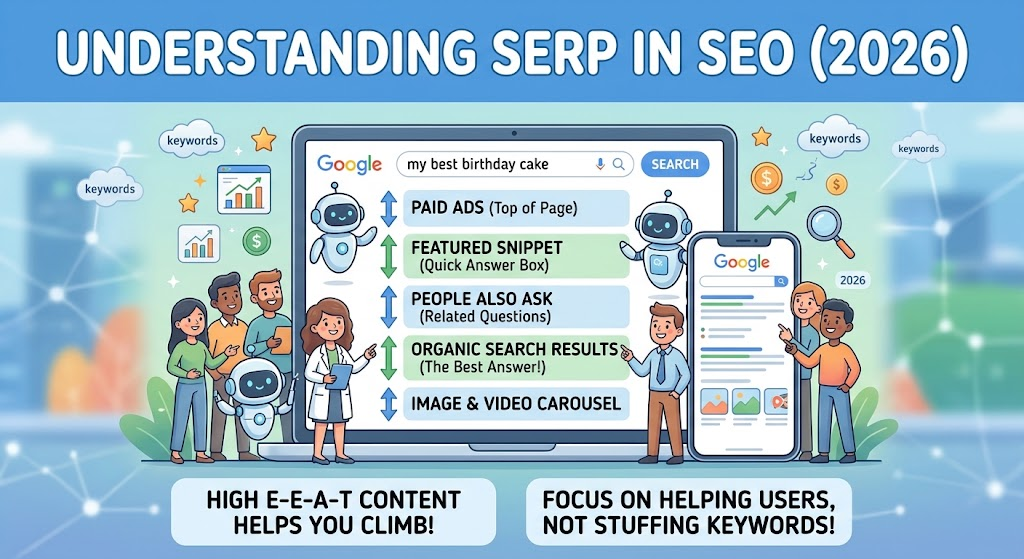
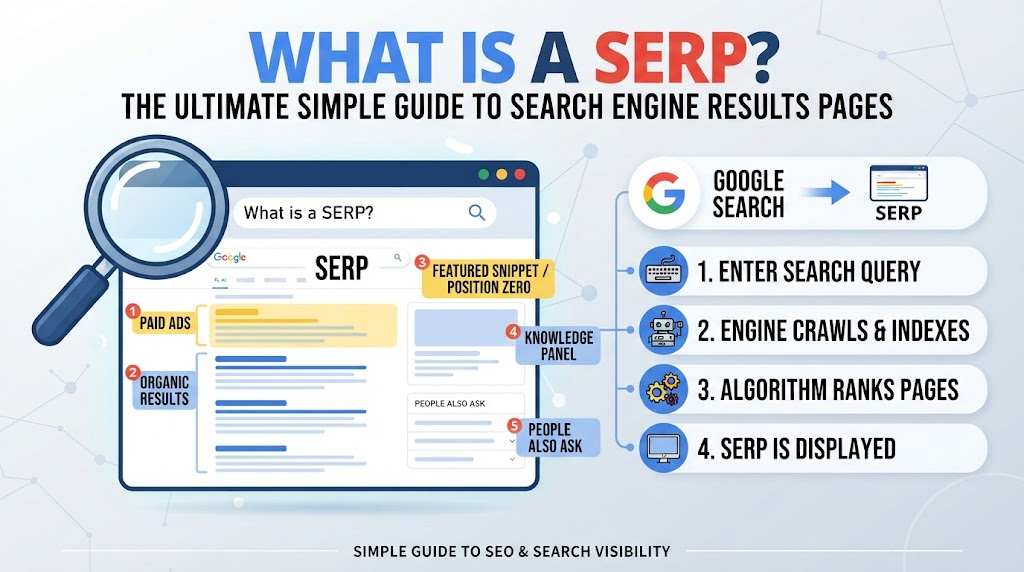
- Paid Ads: These usually appear at the very top or bottom of the page. Businesses pay search engines every time someone clicks on these links. They often have a small label that says “Sponsored” or “Ad”. While paid ads get quick visibility, they disappear as soon as you stop paying money.
- Organic Results: These are the natural website listings that appear below the ads. Web pages earn these spots purely through great content, good user trust, and strong relevance. Nobody can buy a top organic spot on a SERP. You have to earn it by creating valuable articles that answer user queries better than anyone else.
Building strong organic rankings on a SERP takes time, but it brings free, consistent traffic to your blog or online business for months or years to come.
How Search Engines Create a Unique SERP
Search engines do not show the exact same results page to every single person. Instead, they use smart algorithms to customize the SERP for each individual user. This process happens in three main phases:
- Crawling: Smart automated programs (often called bots or spiders) scan the web daily to discover new or updated web pages.
- Indexing: The search engine saves and organizes the content, pictures, and videos from those pages into a giant digital library.
- Ranking: When you type a query, the engine looks inside its index, evaluates hundreds of ranking signals, and displays the best answers on your SERP.
Factors like your physical location, your search history, and the device you are using (like a phone or laptop) all change how your personal SERP looks. For example, searching for “best pizza place” on a phone in Chicago will give you a totally different SERP than doing the same search in London.
Understanding Common SERP Features
Search pages have evolved far beyond plain blue links. Today, Google uses special visual blocks called SERP features to give people instant answers right on the results page.
Here are a few common SERP features you see every day:
- Featured Snippets: Short summary boxes located right at the top of the search results that give a direct answer to a question.
- People Also Ask (PAA): Expandable accordions featuring related questions that people frequently ask about your topic.
- Local Pack: A map block showing three nearby businesses along with their star ratings, opening hours, and phone numbers.
- Knowledge Panels: Detailed information boxes on the right side of the desktop screen displaying facts about a famous person, place, or brand.
- Image & Video Carousels: Visual rows of photos or short YouTube videos related to what you typed.
Winning one of these special features on a SERP can drastically boost your site traffic, even if you are not in the traditional number-one organic link spot!
Why Search Intent Matters Most on a SERP
To rank high on any search page, you must understand Search Intent. Search intent simply means the main reason why a person typed a phrase into the search bar in the first place. If your article does not match what the user is trying to accomplish, the search engine will not keep your page on the first SERP.
There are four primary types of search intent:
- Informational: The user wants to learn something (e.g., “how to make chocolate cake” or “what is a SERP”).
- Navigational: The user wants to visit a specific website (e.g., “Facebook login” or “YouTube homepage”).
- Transactional: The user wants to buy something right now (e.g., “buy running shoes online”).
- Commercial Investigation: The user is comparing options before making a purchase decision (e.g., “best laptops for students 2026”).
Before writing any content, type your focus topic into Google and look at the existing SERP. See what kind of pages are winning—are they blogs, product pages, or video tutorials? Create content that matches that exact intent to increase your chances of ranking on the first SERP.
How to Optimize Your Page for Better SERP Rankings
Climbing to the top spot on a competitive SERP requires a clean strategy. While search engine algorithms check hundreds of minor factors, sticking to core SEO best practices will always yield strong results.
First, focus heavily on On-Page SEO. Include your main topic key clearly in your main headline, within your subheadings, and naturally throughout your introduction and body text. Avoid stuffing words unnaturally, as search engine crawlers prefer smooth, human writing.
Second, write an eye-catching Meta Title and Meta Description. This text acts as your page’s preview snippet on the search engine results page. If your description sounds helpful and exciting, more users will click on your link instead of your competitors’. Higher click rates signal to the search engine that your page deserves a higher rank on the SERP!
The Importance of Building E-E-A-T and User Trust
Google places massive importance on experience, expertise, authoritativeness, and trustworthiness (E-E-A-T). When search engines organize a SERP, they want to ensure they are recommending reliable, accurate, and safe websites to their users.
You can build strong trust on the SERP by sharing original experience, including clear facts, and keeping your content updated. For instance, if you write about digital tools, show real screenshots or personal test notes. Adding a author biography and linking out to reliable industry references tells both visitors and search engines that your content is trustworthy.
When readers enjoy your page and stay to read your content, search engines recognize those positive user signals and reward your site with better stability across every target SERP.
How Mobile Optimization Changes the SERP Layout
More than half of all web searches today take place on mobile devices like smartphones and tablets. Because mobile screens are much smaller than desktop computers, search engines adjust how the SERP looks on handheld devices.
On a phone, SERP features like image grids, short video clips, and local map listings take up almost the entire screen. Standard text links are often pushed further down the page.
To make sure your website performs well on a mobile SERP, use clean responsive design, large readable fonts, and fast-loading images. If your page takes longer than three seconds to open on a phone, visitors will jump back to the search results, which harms your organic rankings over time.
Simple Tools to Track Your SERP Positions
You cannot improve what you do not measure! Tracking where your site appears on a SERP helps you see what SEO strategies are working well and what areas need more attention.
Here are three friendly tools to help you keep tabs on your SERP rankings:
- Google Search Console (Free): Google’s official free dashboard that shows you exact keywords bring people to your site, along with your average position on the SERP.
- SEMrush or Ahrefs: Industry-favorite SEO toolkits that let you track daily keyword rankings, inspect competitor SERP features, and uncover new keyword opportunities.
- Ubersuggest: A beginner-friendly tool that helps you analyze keyword search volumes and check who is currently occupying the top spots on any SERP.
Checking your progress monthly allows you to refresh older content, tweak headline tags, and defend your top spots on the search engine results page.
Conclusion: Start Claiming Your Top Spot on the SERP!
Navigating the world of search engine results pages does not have to feel overwhelming. A SERP is simply a digital catalog designed to connect curious searchers with the best answers available on the internet.
By creating easy-to-understand articles, matching user intent, optimizing your headlines, and sharing authentic experience, you can steadily move your website pages to the top of the SERP. Remember that great search engine rankings take consistent effort and patience. Focus on serving your human readers first, keep your content fresh, and watch your website traffic grow month after month!
What is your biggest challenge when trying to rank on page one? Leave a comment below or share your thoughts—we would love to hear your experiences and help you on your SEO journey!
Frequently Asked Questions (FAQs)
What does SERP stand for in SEO?
SERP stands for Search Engine Results Page. It is the page of links, images, ads, and answers that Google or Bing displays after someone enters a search phrase into the search box.
Why is the first page of a SERP so important?
The first page of a SERP gets nearly all the web traffic. Most people find their answer in the top three organic results and rarely click over to the second page, making page one essential for growing website traffic.
What is the difference between organic search results and paid ads?
Organic results are earned for free by publishing helpful, relevant content that search engine algorithms trust. Paid ads are paid placements where companies pay money every time a searcher clicks on their link.
What are SERP features?
SERP features are special visual result blocks on a search engine page that go beyond traditional text links. Examples include featured answer boxes, interactive map packs, video carousels, and “People Also Ask” dropdown boxes.
How long does it take for a new page to rank on a SERP?
For a brand new website, it typically takes anywhere from three to six months to start building trust and climbing up a SERP. Consistently updating your site with helpful content speeds up this process over time.
Can two searchers see a different SERP for the exact same query?
Yes! Search engines personalize the SERP based on a user’s location, device, browsing history, and account settings. A search for “coffee shop” on a smartphone in New York will bring up a completely different SERP than the same search in Tokyo.